Utena Fansub Ep 37 Translation Notes
Revolutionary Girl Utena Episode 37 The One Who Will Revolutionize The World.mkv
From the beginning of this project, I decided that since it’s impossible to directly translate Utena’s first person pronoun 僕 (boku), I would instead compensate for it by using the closest English language cultural equivalent, which I believe to be gendered third person pronouns (I did other compensation, but this was the most explicit).
At the start of the show, Utena is portrayed as a stereotypical tomboy — a ぼくっこ. Despite breaking some conventions, such a gender expression is still mostly wielded by people who prefer she/her pronouns, so it made sense to have most characters she/her Utena. However, as the show progresses, it becomes clear that there’s more to Utena’s gender non-conformity. Utena’s idealism is cast in direct contrast to the patriarchal oppression of the main villains. Utena is depicted as confident in all matters except those of their own gender. And the gendered roles that Utena effortlessly slides into are all masculine ones.
It makes sense then, for Utena to start getting they/themmed more as the show goes on. But English pronouns require someone else to use them. I thought the most fitting way to work this progression into the dialogue would be to make each member of the student council begin they/themming Utena after a critical loss. It was also important that the loss that causes the pronoun change had to reflect a change in the way they see the world and the way they see Utena.
Miki changed after his first loss. Not because the loss itself was particularly damaging to his understanding of gender, but because Utena and Miki are depicted as friends immediately following it. Anyone that close to Utena (besides Anthy) would follow in Wakaba’s footsteps and begin using their preferred pronouns. He maintains his patriarchal worldview, and perhaps he doesn’t even realise the rebellion Utena is performing against it. He is young and naive. He’ll go along with things without properly understanding them.
Juri changed after her first loss. This change is not because she respects or understands Utena more, and certainly not because they become more friendly. Juri originally saw a kindred spirit in Utena. Another girl, trying to make it in a patriarchal world. After the loss, she understands that “miracles are real, just not for me”. She is attempting to process the idea that Utena is special by distancing them from womanhood (and therefore she, a woman, is doomed to live without miracles).
Touga and Saionji only get their first they/thems out in this episode.
Touga: 今頃、彼女のもとにも手紙は届いているだろう。
Touga: I’m sure they have received their letter too.
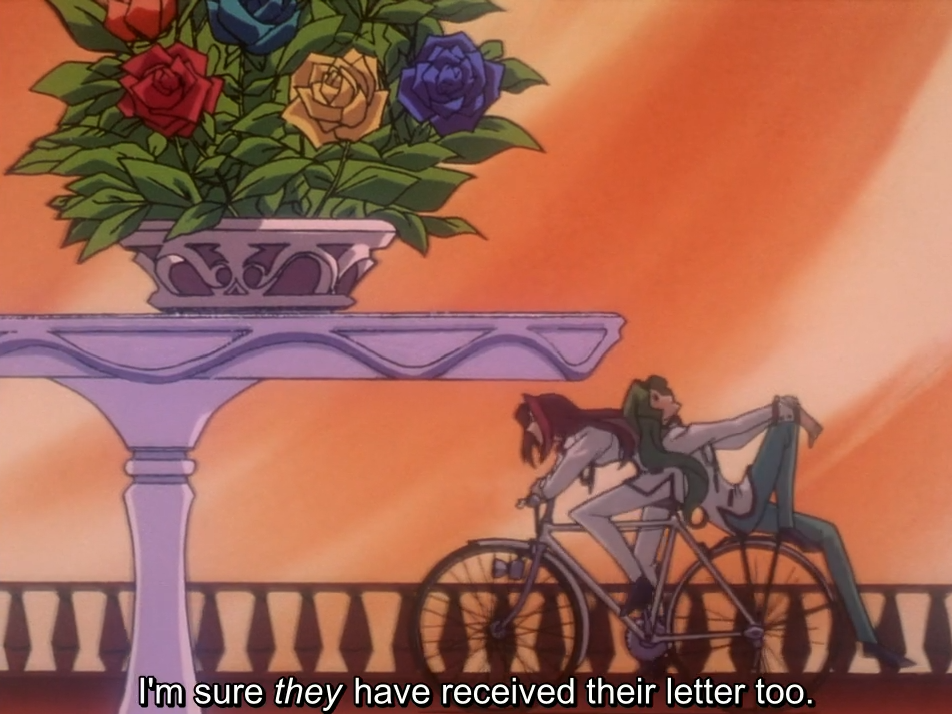
then, later in the scene:
Saionji: ところで知っているのかな?天上ウテナは。
Saionji: Utena Tenjou… do you think they know?
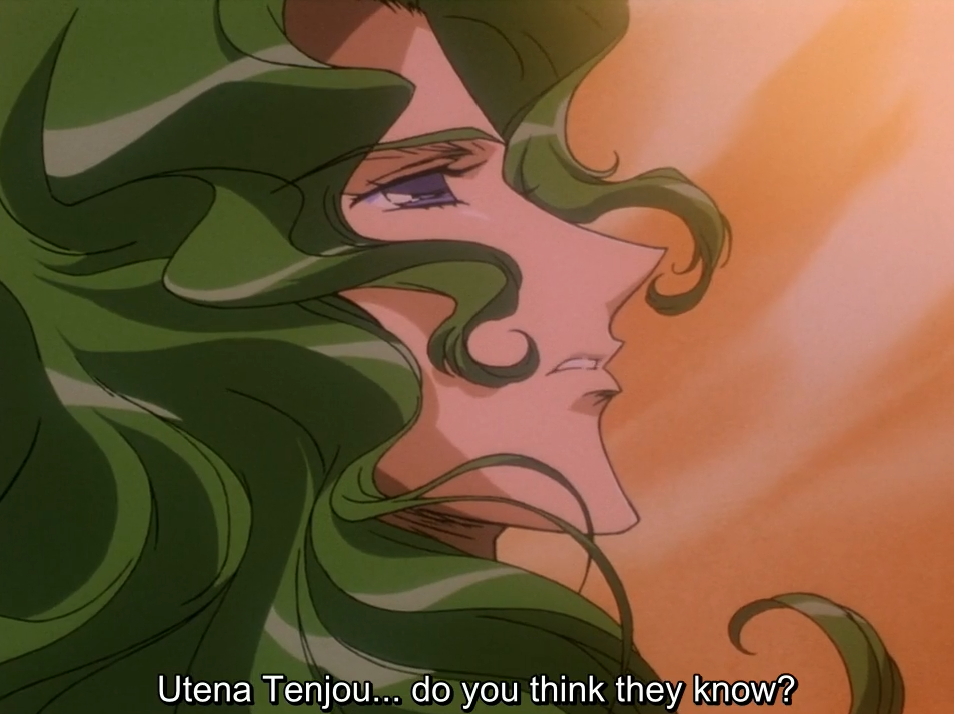
After his final loss, Touga’s real love and respect for Utena is recontextualised in his mind. Where he once saw a powerful and beautiful woman, he now sees a person in control of their own destiny. A person who would rather fight to the bitter end for what they believe in than simply choose to be rescued. He finally comes to understand Utena for who they are.
Saionji also seems to have done a lot of work on himself prior to these final few episodes. He seems a lot more self-aware and a lot more understanding of others. When he loses with Touga, I can see how his image of Utena as the helpless girl in the coffin transforms into that of a powerful warrior. She has the ability and opportunity to climb out of the coffin now, and despite all his talk, Saionji does not.
Akio: 今夜の君はなんだかとても女の子だなぁ。
Akio: You seem very much a girl, tonight.
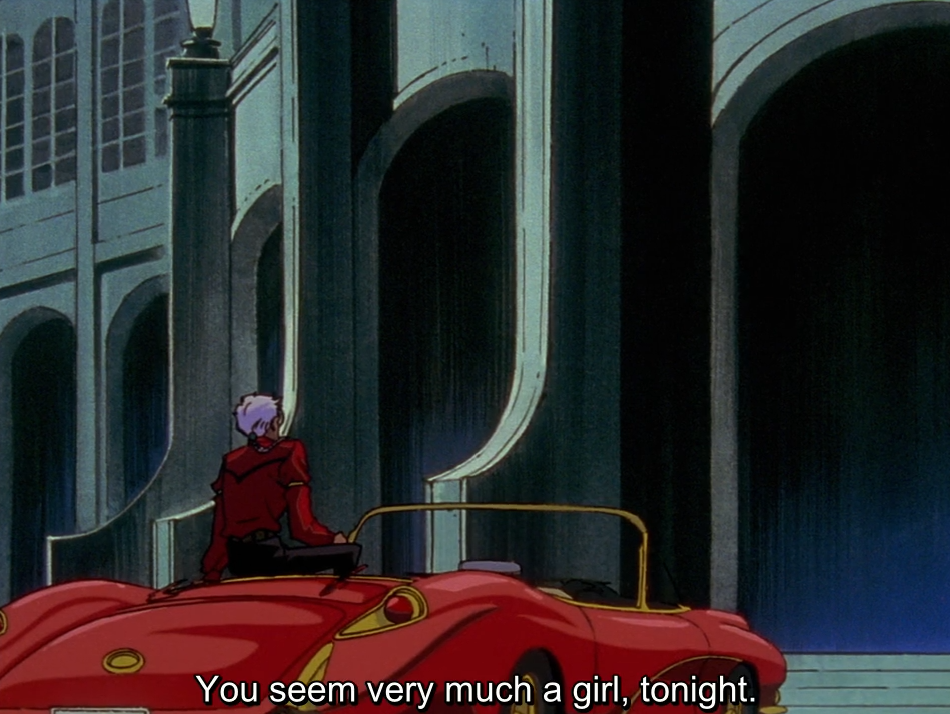
then later:
Utena: 今夜の僕はとても女の子らしいんだって!あきおさんが言ってた。
Utena: Apparently I was very girly tonight! That’s what Akio said.
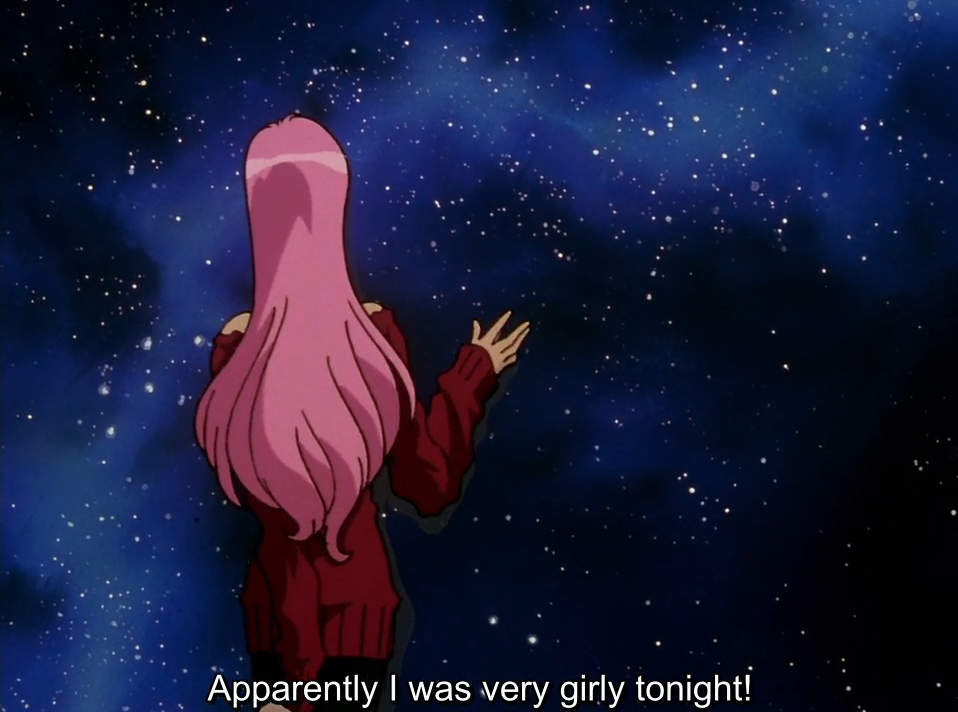
Note the difference between “very much a girl” and “very girly”! Akio did not in fact say “very girly” but that’s what Utena interpreted it as. The difference is in Utena’s use of らしい after “girl”, making it “girl-like” or “girly”. The Japanese certainly sounds like a description that you wouldn’t use for an actual girl.
On top of that, the difference shows how much Utena struggles with their gender. Akio’s statement carries a lot of weight — he sees Utena being broken into shape. He sees them transforming into a girl and giving up their rebellion thanks to his manipulation. Utena doesn’t see this. They claim to be “a girl”, yet they misinterpret Akio as likening them to a girl, rather than what he actually said.
Other translations have used the word “feminine” in both Akio and Utena’s lines, but despite it being a more natural English way of phrasing it, I think there are four reasons this is not ideal.
- The unnatural phrasing draws attention to the line.
- It’s highly important that the phrasing differs slightly between Akio and Utena.
- The same word should be used in the lines immediately following: “What does that mean? To be a girl?” and then Anthy: “Ultimately, a girl is just like the Rose Bride.”
- I think the word girl specifically is very important to use here because it conveys youth as well, not only femininity.
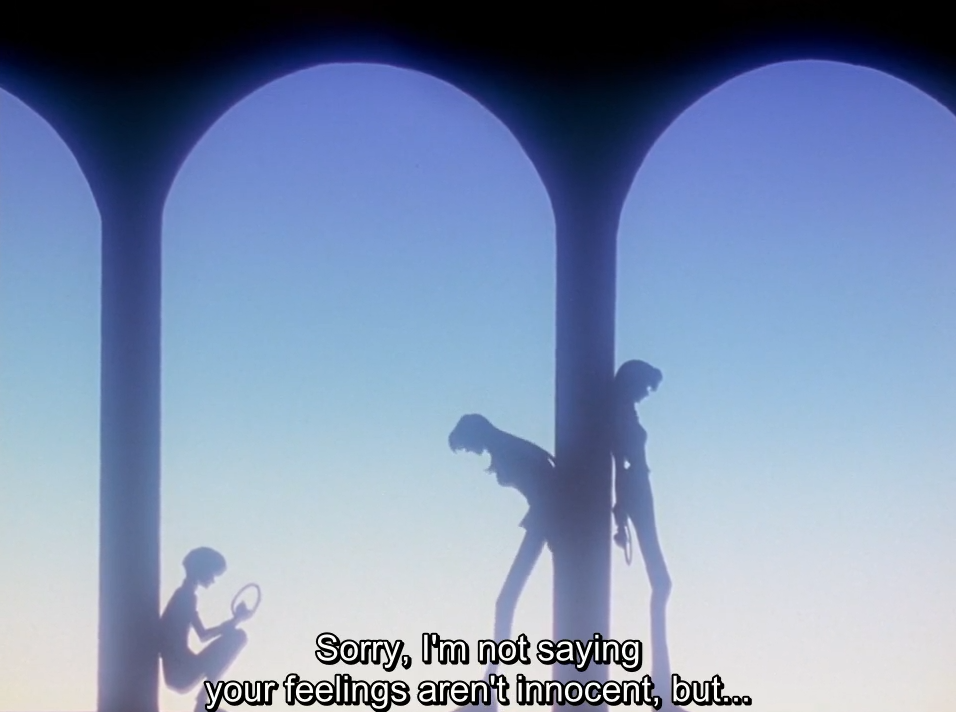
Juri: 君はアンシーをどうするんだ?好きなんだろう?
Utena: それは、先輩の好きとはちがいますよ。僕のは純粋に… いや、先輩のも純粋だろうけど…
Utena: でも、僕はもう… 姫宮の事… 姫宮の事…
Juri: What are you going to do with Anthy? You like her, don’t you?
Utena: I think we mean something different when we say “I like her”. For me, it’s an innocent kind of– Sorry, I’m not saying your feelings aren’t innocent, but…
Utena: Either way, I don’t… Himemiya is just… She’s just so…
This is a really interesting scene to me because it’s the first time Utena acknowledges Juri’s homosexuality. Utena seems to be aware of its taboo nature, despite having been too naive to see its presence in the past. I think this scene is doing a lot of work in establishing how Utena conceives of lesbianism and how they are denying it in themself.

Thank you very much to my editor @dontbe-lasanya for all your hard work as always!
To follow new releases as they come out, follow the blog! To see all episodes released so far, go here:
Haru Dipthong’s Utena Fansub - Google Drive
Rose divider taken from this post.