Utena Fansub Ep 16 Translation Notes
Revolutionary Girl Utena Episode 16 The Almglocken Of Happiness.mkv
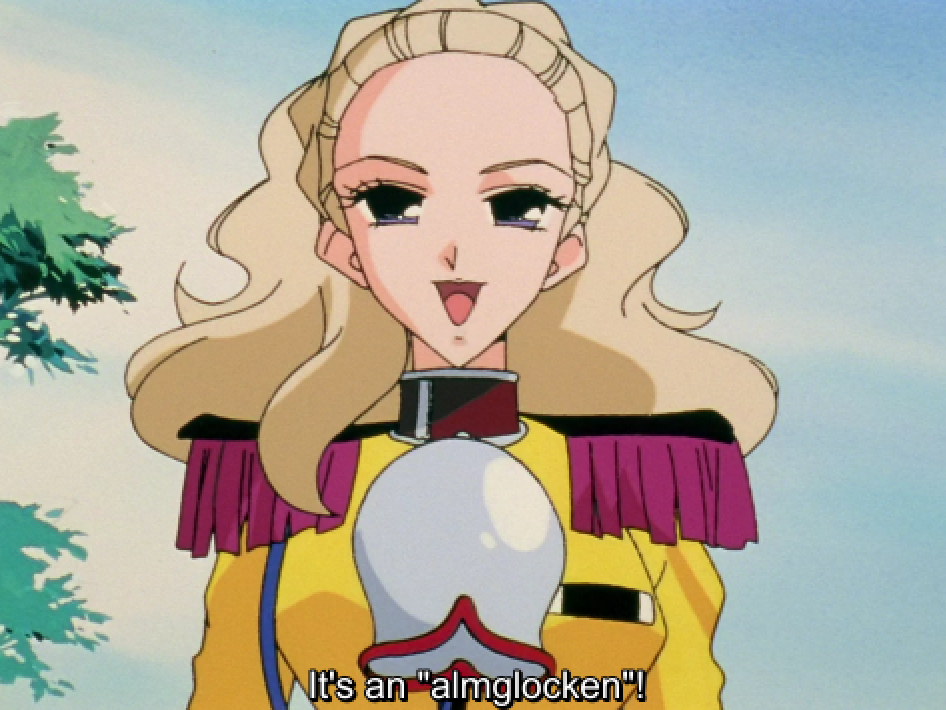
I’ve been dreading this episode since the beginning of this project. Most translations of the cowbell episode have two major problems that I knew were going to be really hard to overcome in my translation.
- How on earth does Nanami not know that a COWbell is something that a COW wears?
- Why does Nanami keep saying moo in regular conversation?
When I actually got into the translation though, it was so much more difficult than I had even anticipated! Not only were there two very large episode-spanning translation problems to solve, but there were also TONS of difficult individual lines. And on top of it all, a song to translate!
I was not happy at all with my first draft. I sent it to @dontbe-lasanya and went to bed. When I woke up and saw their edit, it was like magic. They had transformed my extremely rough script into a work of art! I’m so so happy with this episode now, and the majority of the credit for that has to go to Anya.
So anyway, how did we fix those two big problems?
How on earth does Nanami not know that a COWbell is something that a COW wears?
Obviously the Japanese word for cow is not “cow”. It’s 牛 (ushi). However, the Japanese word for cowbell is カウベル (kauberu) — it’s a loanword; it’s just “cowbell” turned into katakana. There’s no obvious connection between the words for “cowbell” and “cow” in Japanese, unlike English. Also, カウベル is not a very familiar word for most Japanese kids and teens (the target audience of Utena) and sounds foreign and therefore fancy (given the right context). On the other hand “cowbell” is a very familiar word in English, or even if it isn’t, “cow” and “bell” are. It also doesn’t sound fancy or foreign.
In Japanese, Nanami falls into some cringeworthy teenage social pitfalls in this episode. 1. The classic japanese kid thing of assuming katakana loanwords are cool or fancy. 2. The universal kid thing of pretending to know a word she doesn’t know to seem smart/cool. These things are like, a HUGE part of the conceit of the episode. IMO, it’s crucially important to get these ideas across in the translation. To fail to do so (i.e. by translating カウベル as “cowbell”) would be akin to cutting out the first 8 minutes of the episode.
Translators will often translate katakana loanwords directly back into the original word, but that clearly doesn’t work here. Anya decided to go with almglocken as the translation for カウベル because Miki is the first person to give the cowbell its name, and almglocken doubles as the orchestral term for a musical cowbell (plus the yodelling in the cutaway scenes really sells the German choice, which we only discovered after we had committed to it!). I love how that scene feels where Miki names the bell - it really feels like he and Juri call it an “almglocken” and Nanami just goes along with it, not wanting to admit that she doesn’t know what almglocken means. She totally reads as a stupid kid who wants to be a part of European high fashion without actually knowing anything, which is exactly how she reads in the original Japanese script!
Why does Nanami keep saying moo in regular conversation?
First things first — the sound a cow makes in Japanese is not “moo”. It’s モー (mō/mou) which is prounounced almost exactly like the English word “more” in non-rhotic accents like my Australian accent. In an American accent it probably sounds like “mall” without the ending L sound.
So, cows say “mou”. But もう (mou) is also a dictionary word in Japanese. It can mean “already” as in “I already did that”, but it can also be used as an interjection (similar, but not exactly the same, to how “already” can also be used as an interjection as in “enough already!”). もう (mou) carries other nuances with it as well — there is a cultural image that teenage mean-girl types (like gyaru) tend to use it a lot. I like translating it as “ugh”, which I did several times in this episode.
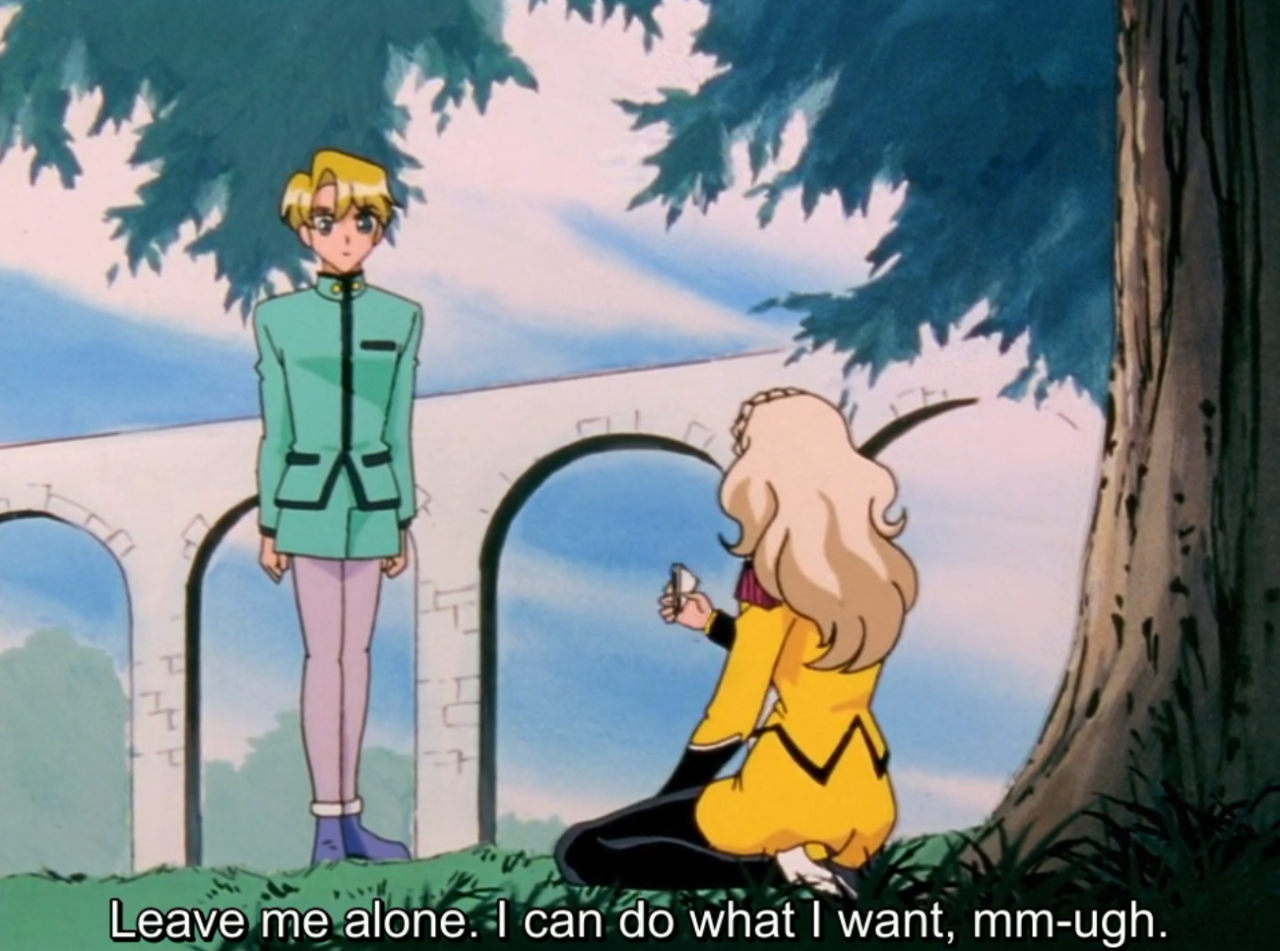
The writers are getting a lot out of the cow metaphor in this episode. There’s the whole thing with Touga selling Nanami away as a metaphor for his manipulation of her (and women in general) in order for him to gain patriarchal power (he even eats her meat!!). But there’s also this equating of cow mooing with the word もう which is associated with young girls. Whenever Nanami moos this episode, even right up until the end when she physically transforms into a cow, you could translate it as “ugh” if you didn’t want to preserve the cow sound meaning. Every moo fits into her sentences as a bitchy interjection.
This is a hard thing to get across in translation, so I used a combined approach. Sometimes I directly translated もう as “ugh”, which morphed into “mm-ugh” and then “muuoo”. Other times I compensated by using words with “ooo” sounds in them and drawing out the sound (like “moOOove”.
Dona, dona, dona, donaaaa
As I mentioned in my post yesterday, while translating the song, I made particular pains to match the meter of the Japanese lyrics with the English lyrics.
あるはれた ひるさがり いちば へつづくみち
One day on a clear lazy afternoon, on the road to the marketplace
A literal translation of the line would be something like this
One clear afternoon, on the road to the market
But I’m sure you can see how this doesn’t have nearly enough syllables, much less stress on the correct syllables. Because Japanese has less consecutive consonants, it tends to have words with more syllables, but shorter syllables than English. They don’t have words like “cramp” where 4 consonant sounds exist in one syllable — usually there’s only 1 consonant per syllable. This means that if we’re matching beat-for-beat, English can fit more words in per bar, which means when translating literally, we end up with lyrics that are too short! That’s why I’ve added “One day on a” and “lazy” and extended “market” to “marketplace”. This came up constantly during the translation of the song, where I was consistently needing to create words that didn’t exist in the original to keep the meter similar.
A few little notes to finish
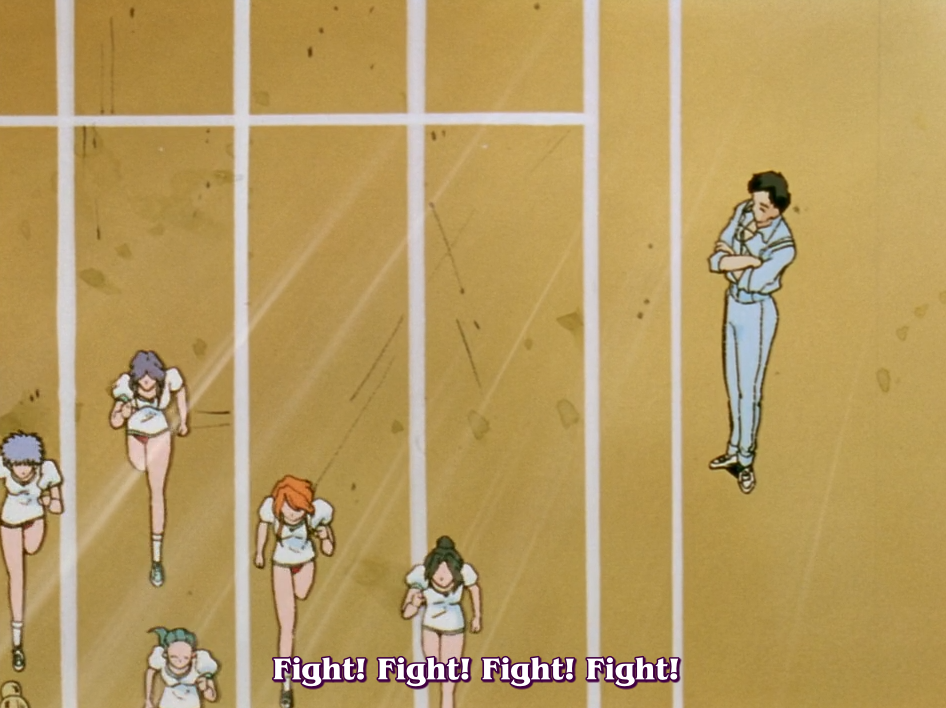
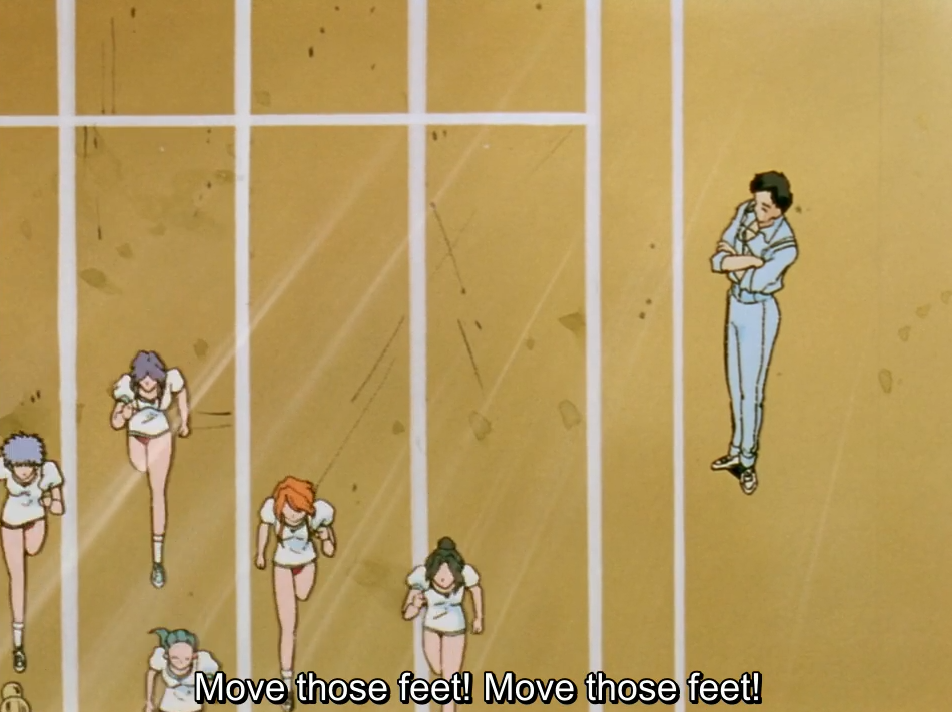
This scene where the girls in PE class are chanting ファイト!(faito) while they run is hilarious to me because both other translations I have access to translated it as “Fight! Fight! Fight! Fight!” which is just… not what they’re saying. Obviously in English chanting “fight!” makes it sound like you’re encouraging two people to physically fight. In Japanese, ファイト is a loanword and does come from the English word “fight”, but it only means “fight” in the sense of like, metaphorically fighting: overcoming mental barriers, pushing through, doing your best. They’re just chanting to get their motivation up. I translated it as “Move those feet! Move those feet!” so that when Nanami brings up the rear I could switch it to “MoOOove those feet!”
Translating it as “Fight! Fight!” is just completely unacceptable no matter what your translation goals are tbh. If you care about “preserving aspects of Japanese culture” in the translation, you should translate it as “Faito! Faito!” or “Fighto! Fighto!”.
I want to note that I’m so happy with how the characters talk about fashion. They really sound like they know what they’re talking about (thanks to Anya). So much of the time translations sound like they were written by someone who doesn’t have any knowledge about the field the characters are talking about, which makes the dialogue sound super forced even when the characters ARE supposed to know what they’re talking about. To give another example, Anya flagged this before with how Touga talks about Miki’s piano playing. The standards are so low for this kind of thing that my limited knowledge of music helped me write a translation that sounded knowledgeable enough to be worth commenting on!
Also, I’m REALLY glad we went with “dyke” as the translation for 男女 (otoko-onna) a few episodes ago. Nanami uses that word again this episode and Utena’s reaction really works with the slur.

Thank you so much again to @dontbe-lasanya. This episode wouldn’t have been possible without you!
Be sure to follow the blog to stay updated with new episode releases! See below for all episodes released so far.