Utena Fansub Ep 21 Translation Notes
Revolutionary Girl Utena Episode 21 Nasty Pests.mkv
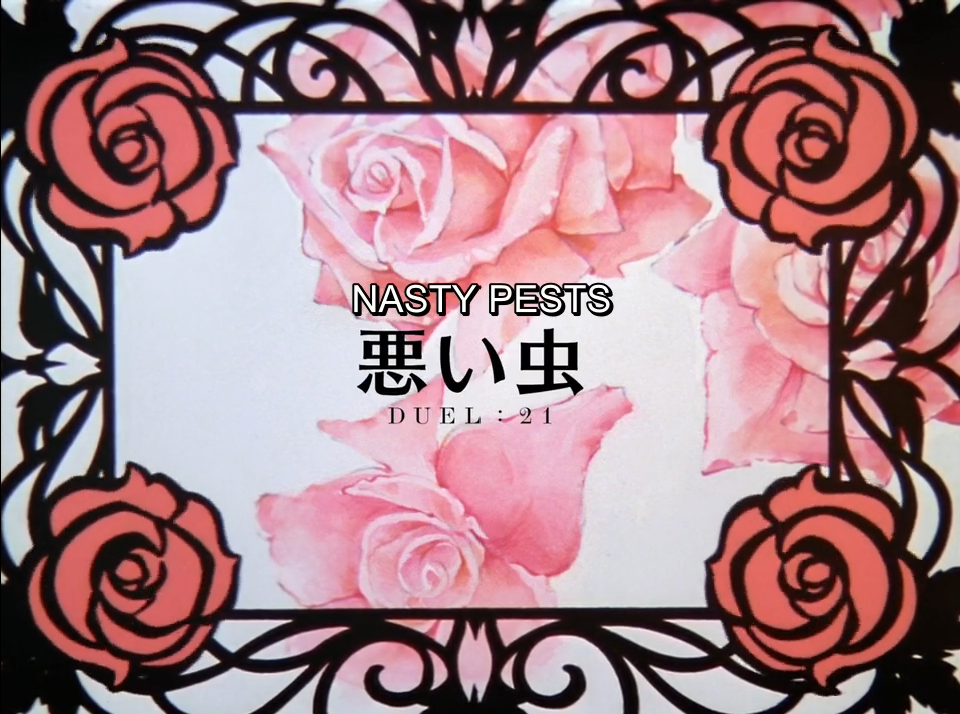
For those keeping track, this is the second episode where I’ve changed the episode title from the established translation. I try not to mess with the titles since it can make the episodes hard to google or otherwise reference, but in some cases the title is a direct reference to a line spoken in the episode which I have translated differently. The first case was The Cowbell/Almglocken of Happiness. This time, I’ve changed Troublesome Insects to Nasty Pests.
The original title is 悪い虫 which, translated literally, means “bad/evil insects”. However, the way this phrase is used by the characters in the episode changes how one should interpret it:
Nanami: お兄様にたかる虫は一匹たりとも許せない。
Nanami: I won’t tolerate even a single pest buzzing around him.
This is the first instance of the word 虫 (insect/bug) being used to describe a person. Nanami is comparing people hanging around Touga to insects swarming around something (たかる), like ants around a sugar cube, or flies around rotting food. I could have used the word “insect” at this point, but the translation I chose for 虫 needed to match throughout the epsode, and the word “pest” fit much better for the next line:
Nanami: 迂闊だったわ。本当の悪い虫は自分の足元にいた。
Nanami: I should have known. The nastiest pest was at my feet this whole time.
This is the second time it’s used, and the first time the complete phrase appears (悪い虫). The problem with using “insect” in this context is that “insect” as an insult emphasises how little a person matters, and suggests that problems they cause are annoyances at worst. “Pest” suggests that the problems they cause can lead to actual harm. Nanami wouldn’t be so upset with Keiko if she didn’t think she was causing real problems, so it makes more sense to use “pest”.
Keiko: 本当の悪い虫はななみだ。なんだあの女は悪い虫だったんだ。
Keiko: The nastiest pest… was Nanami. She was the real pest all along.
In this case, translating 虫 as “insect” sounds really weird. I like the reversal where Keiko realises that Nanami was actually the one leeching off her and her friends, and “pest” is a much better word for that.
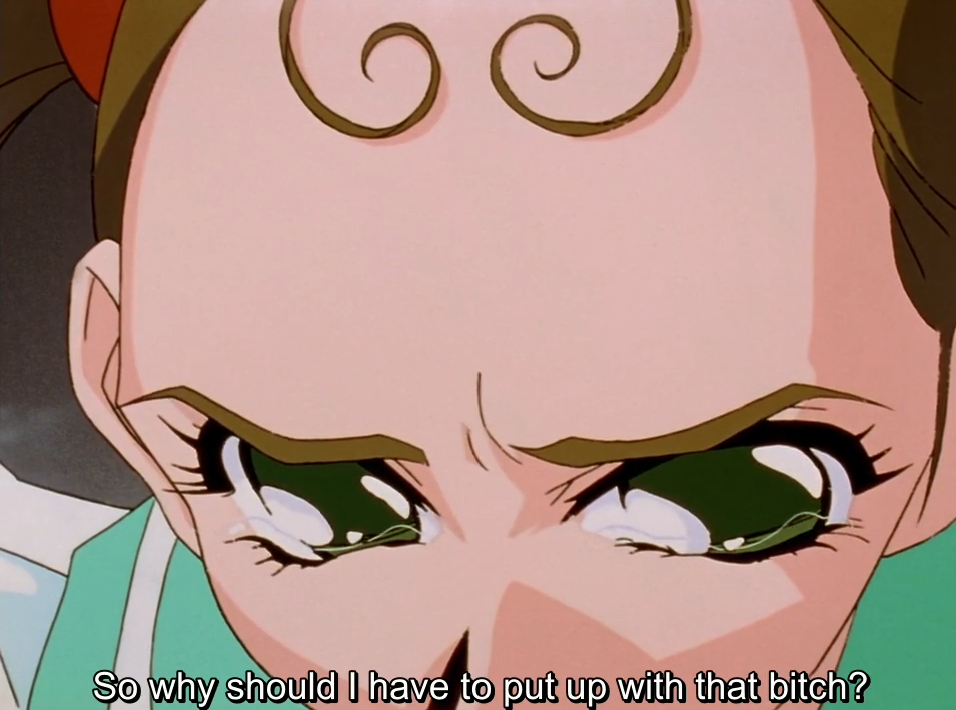
なのにどうしてあんな女に遠慮しなくちゃならないの?
So why should I have to put up with that bitch?
While Japanese doesn’t have many swear words in the sense we do in English, it does use certain dismissive phrasings to indicate extreme distaste. English swear words serve a similar semantic purpose in my opinion, so the dismissive あんな女 or even just 女 can be translated as “bitch” in the right circumstances.
In fact, when I realised this during the translation of this episode, I remembered the Wakaba episode and immediately regretted not using “bitch” instead of “that girl” when Wakaba is talking about Anthy (she also uses あの女 and 女). I think it would make the scene hit a lot harder and get across more of the anger.
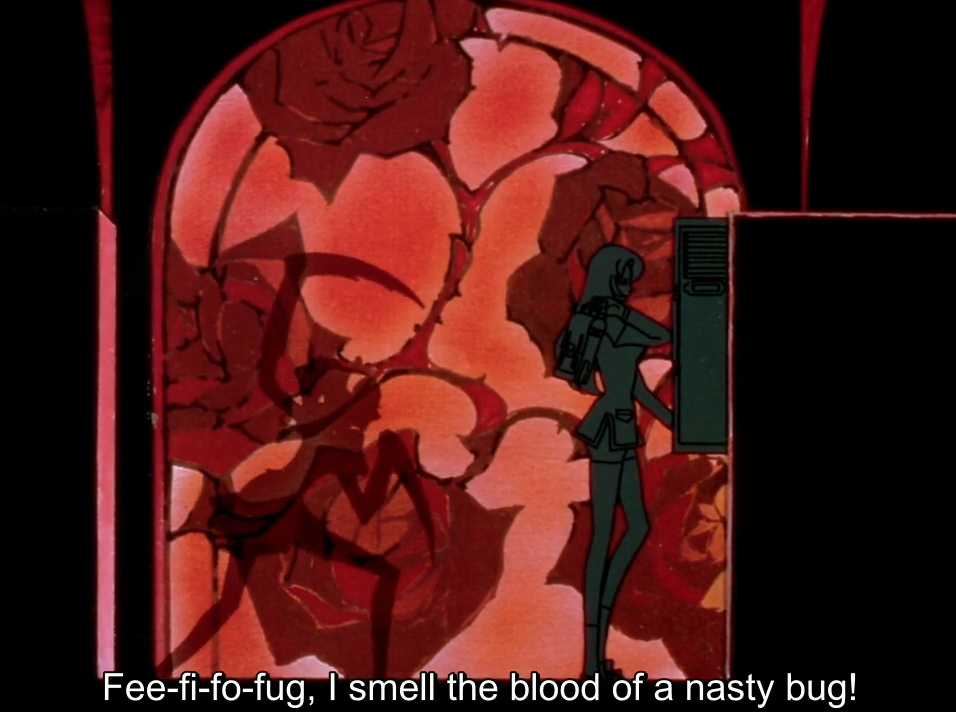
C-ko Mantis: 悪い虫はいねえがぁ?悪い虫はいねえがぁ?
C-ko Butterfly: あー!なまはげよ!
C-ko Mantis: Fee-fi-fo-fug, I smell the blood of a nasty bug!
C-ko Butterfly: Ahh! A giant!
These shadow plays reference a lot more traditional Japanese folklore than I remember! The phrase 悪い虫はいねえがぁ? echoes the classic stock phrase spoken by Namahage oni characters: 悪い子はいねえがぁ?(the difference being 子 - child instead of 虫 - insect). Literally translated it means “Any naughty kids around?” in a sort of regional or archaic affect.
The butterfly cries “Ahh! A namahage!” which is a fairy tale monster that most Japanese kids would know about. So I needed to find a translation that referenced a fairy tale that my audience would be familiar with! The fug-bug rhyme was Anya’s idea :P

Thanks to my wonderful editor @dontbe-lasanya for their help as always!
Follow the blog if you’d like to stay updated with releases! You can find all episodes released so far here:
Haru Dipthong’s Utena Fansub - Google Drive
Rose divider taken from this post.